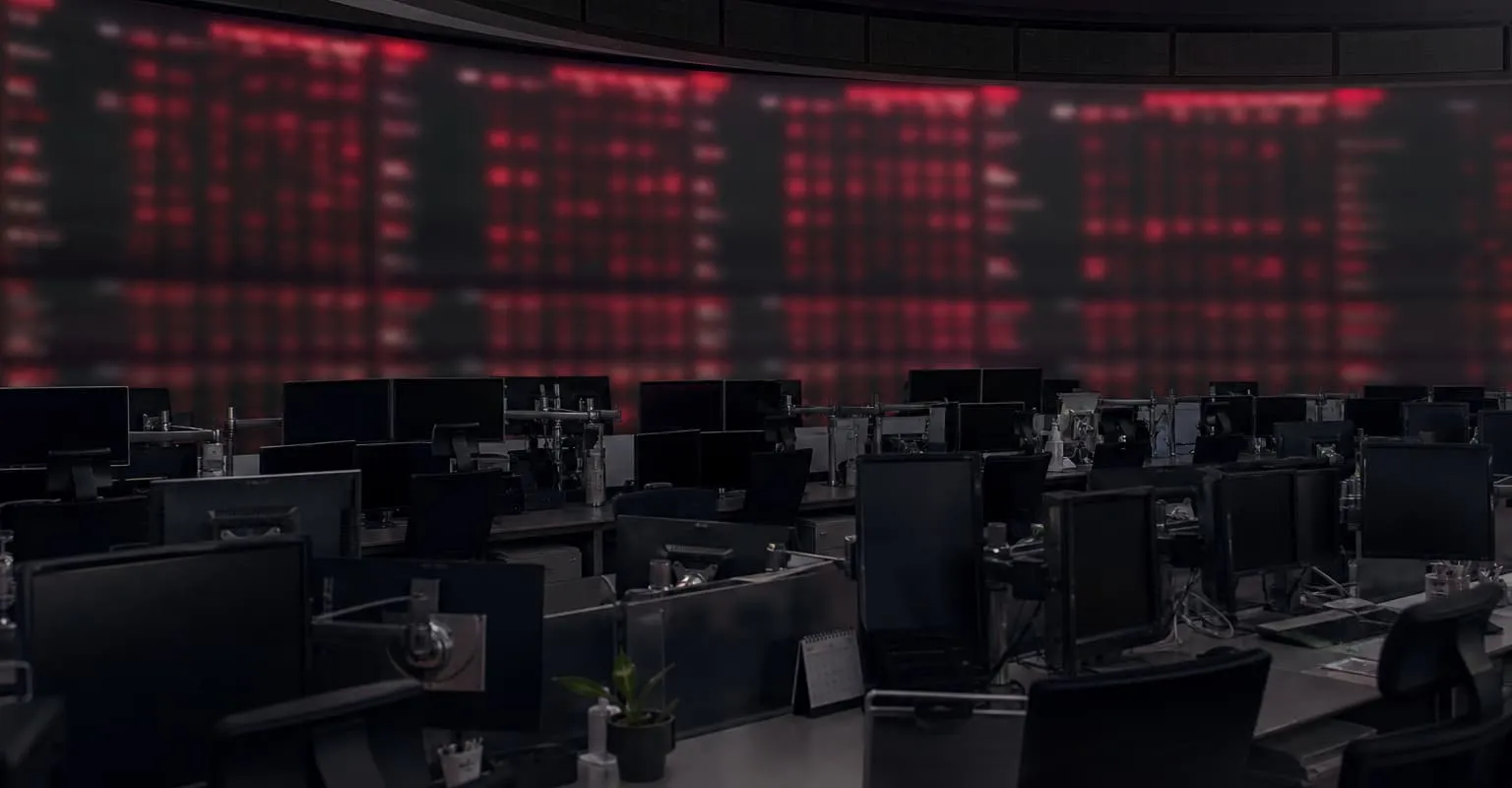
Korea business brief: Black Tuesday KOSPI crash
KOSPI's 10.84% fall put chip and AI-investment skepticism at the center of a Korea-touching portfolio stress test.
Source: The Korea Times
What happened
South Korea’s KOSPI closed at 6,023.63 on July 28, down 10.84% in a session The Korea Times described as a deepening chip rout. The index had opened at 6,400.27, already down 5.26%, and briefly fell below 6,000 in the afternoon.
Trading safeguards arrived early. A sell-side sidecar was triggered at 9:06 a.m., the 22nd such activation this year, and a circuit breaker halted trading for 20 minutes beginning at 10:14 a.m. Foreign investors were net sellers of 4.98 trillion won ($3.41 billion). Retail investors were net buyers of 4.32 trillion won, while institutions were net buyers of 638.7 billion won.
The breakdown
The stress centered on the two major Korean memory-chip names. SK hynix fell 14.65% to 1.55 million won, and Samsung Electronics fell 13.39% to 222,000 won. Overnight, the PHLX Semiconductor Index had declined 2.23%. The previous day’s Shanghai debut by Chinese memory producer CXMT also fueled concern about China-based competition in memory chips.
The report also identified stretched valuations and Middle East geopolitics as pressures. Shinhan Securities analyst Kang Jin-hyuk pointed to growing risk aversion around the AI investment cycle and China’s memory competitiveness.
The wider market was caught in the move. The Kosdaq closed down 7.72% at 705.85, after a sidecar at 9:14 a.m. and a circuit breaker at about 12:01 p.m. The won, however, strengthened by 6 won to 1,462.5 per dollar.
Why it matters outside Korea
For overseas investors, suppliers, and Korea-linked employers, this was not simply a large local-equity headline. The selling concentrated attention on the same chip and AI expectations that can shape exposure to Korea’s biggest listed companies. A stronger won alongside steep equity losses also shows why a Korea position cannot be reduced to one market signal.
The foreign, retail, and institutional flows describe who was on each side of the session, but they do not settle the case for the next move. Foreign investors were net sellers of 4.98 trillion won, while retail investors bought a net 4.32 trillion won and institutions bought a net 638.7 billion won. The figures are a reason to inspect exposure and liquidity, rather than an instruction to follow either group.
Financial authorities were watching leverage as well as prices. Financial Services Commission Chair Lee Eog-weon said the regulator was considering further curbs on single-stock leveraged ETFs tied to Samsung Electronics and SK hynix. One idea was to cap those ETFs at 20% of an individual’s financial-investment portfolio. A new rule taking effect Friday will raise the minimum cash deposit to 30 million won.
What travelers and expats should watch
- Check leveraged ETF exposure: review whether any Korea fund, broker account, or employer-linked investment includes single-stock leverage tied to Samsung Electronics or SK hynix.
- Do not read retail buying as a recovery signal: retail investors bought a net 4.32 trillion won, but that is a flow figure, not evidence that the selloff has ended.
- Watch Friday’s deposit rule: investors considering products covered by the new requirement should verify the 30 million won minimum cash deposit before placing an order.
- Separate currency and stock moves: the won strengthened while both the KOSPI and Kosdaq fell, so convert-currency decisions and equity-risk decisions deserve separate checks.
Context
Read this as a leverage-and-chip-cycle stress day for Korea-touching portfolios, not as a generic declaration that Korea’s economy has collapsed. The facts point to a sharp reassessment of AI investment and memory-chip competition, amplified by market structure and geopolitical risk. That distinction matters when deciding what to monitor next: leverage conditions, chip-sector exposure, and the relationship between foreign selling and the won.
Korelay take
Read this as a leverage-and-chip-cycle stress day for Korea-touching portfolios, not as a generic declaration that Korea’s economy has collapsed. The facts point to a sharp reassessment of AI investment and memory-chip competition, amplified by market structure and geopolitical risk. That distinction matters when deciding what to monitor next: leverage conditions, chip-sector exposure, and the relationship between foreign selling and the won.
Editor note: Desk reporting supplies the timeline; Korelay adds the overseas behavior layer (what to change, what not to assume, what to re-check). If you only need the wire facts, open the primary link in Source.
Source
The Korea Times: Black Tuesday: Seoul stocks crash over 10% as chip rout deepens — paraphrased for briefing; read the original for full detail.