Korea food-travel brief: union-led Baekdu Heaven Lake tour maps Yanji routes and border crossings
A four-day KCTU Manufacturing Alliance pilgrimage to Yanji and Baekdusan Cheonji highlights Korean-tourist infrastructure, new Tumen road links, and what organized cross-border travel still cannot reach.
Source: Tongil News
What happened
According to Tongil News, a 3-night, 4-day “Baekdusan historical peace pilgrimage” with the KCTU Manufacturing Alliance ran September 9–12, 2026. The group included 17 union officials, a Tongil News reporter, Tongil Tour staff, and one local guide. They met at China Southern Airlines’ E counter, Incheon Terminal 1, flew to Yanji Chaoyangchuan Airport (arriving around 3 p.m.), and returned to Incheon near 8 p.m. on the final night.
The breakdown
Yanji as a Korean-tourist hub: Day one moved by 24-seat limousine to Imdobaekhak “100-year charcoal grill” in Andong, Jilin, where staff fluent in Korean and Chinese served doenjang liquor and pork belly to Korean tourists. Tongil News notes Hangul signage and foreign cars across Yanji, signaling how familiar the city already feels to visitors from the South.
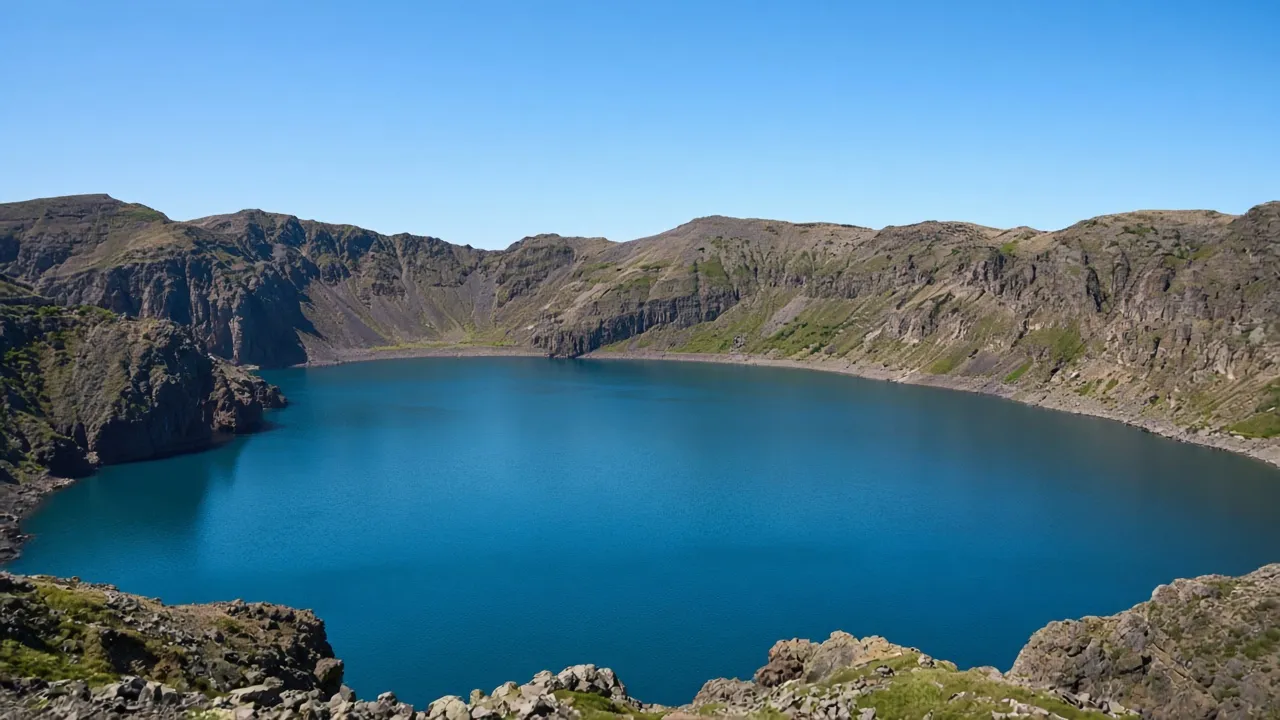
Heaven Lake and jobs on the jeep road: On day two the group climbed Baekdusan Cheonji. Hundreds of white 6-seat jeeps ran visitors along a fully paved road to the crater lake — each vehicle, participants noted, representing a local livelihood. Kim Young-jin of Korea & Company ES told Tongil News he wished Koreans on both sides could visit freely once unification and comparable living standards made joint travel possible. The afternoon stop was the Yanji Prison Anti-Japanese Struggle Memorial, marking a June 1935 breakout in which a 17-member command led by Kim Myeong-ju, Lee Tae-geun, and Lee Chun-yeong helped 49 prisoners escape.
Border infrastructure and literary stops: Day three began at Yonghoge, Hunchun, viewing the 1959 Tumen River Railway Bridge linking North Korea’s Rason area with Russia’s Hassan, still carrying freight and passengers. Tongil News adds a Tumen River road bridge opened in September 2026, widening North Korea–Russia trade beyond rail, while reports of an imminent Sinuiju–Dandong bridge point to more new links. At Namyang Pavilion, Tumen, the group used binoculars to observe Onsong County, North Hamgyong Province. The route also covered poet Yun Dong-ju’s birthplace in Longjing and closed at the Yanbian Korean Autonomous Prefecture Museum.
Why it matters outside Korea
Foreign travelers often treat Mount Baekdu / Changbai as a remote volcano or a North Korean myth. This report maps Yanji, Hunchun, and Tumen as an active Korean-tourism belt with jeep fleets, bilingual restaurants, and new road-and-rail border links to Russia and China. Anyone tracking Northeast Asia logistics or group travel from South Korea gets a ground-level view of where visitors move and look across the Tumen — not where embassy advisories end.
What travelers and expats should watch
- Yanji air routing: Confirm whether operators still use Yanji Chaoyangchuan Airport with ~3 p.m. arrivals from Incheon Terminal 1 — flight times set the whole 3-night rhythm.
- Baekdu jeep quotas: Peak season means assigned 6-seat jeeps, not self-drive summit access; budget a full second day for weather delays.
- September 2026 Tumen road bridge: The new span beside the 1959 railway bridge shifts visible freight patterns from Yonghoge; verify current viewing-platform rules before assuming binocular access at Namyang Pavilion stays open.
- Memorial and museum hours: The Yanji Prison memorial, Yun Dong-ju birthplace, and Yanbian museum may prioritize group bookings — confirm schedules if you want the same route without a union delegation.
Context
Read this as a documented Korean-organized tour through China’s Yanbian border belt, not as proof South Koreans can freely enter North Korea or book “unification travel” on demand. Core facts: Sept. 9–12 / 17 union officials + media + Tongil Tour / Incheon–Yanji air / Baekdu Cheonji jeep road / 1935 Yanji prison memorial / Tumen rail plus new road bridge / Onsong overlook / Yun Dong-ju sites. Korelay’s frame: Yanji is already a Korean-language tourism hub whose infrastructure and new cross-border bridges show how Northeast Asia moves goods and people while the inter-Korean line stays frozen.
Source
Tongil News: “백두산 천지에서 한민족의 기운을 누리다” — Korean original; paraphrased for briefing; read the original for full detail.