Korea food-travel brief: 2027 defense budget crosses 70 trillion won with OPCON push, drones, and border tech
Seoul Shinmun reports South Korea's first 73.3 trillion won defense plan — focused on wartime command transfer, anti-drone systems, and KF-21 production — and what that signals for DMZ travel, border-area visits, and peninsula risk reading.
Source: Seoul Shinmun · 정치
What happened
According to Seoul Shinmun (Sept. 1), the South Korean government approved a 2027 defense budget of 73.2777 trillion won — an 8.2% increase from this year and the first time national defense spending has crossed the 70 trillion won mark. The Cabinet locked the government draft at a meeting on Sept. 1, sending it toward National Assembly review.
The breakdown
The plan splits into three main buckets. Force operations take 50.0416 trillion won, up 5.9%. Defense capability improvement gets 22.7112 trillion won, up 13.8% — the fastest-growing slice. Military administration accounts for 524.9 billion won.
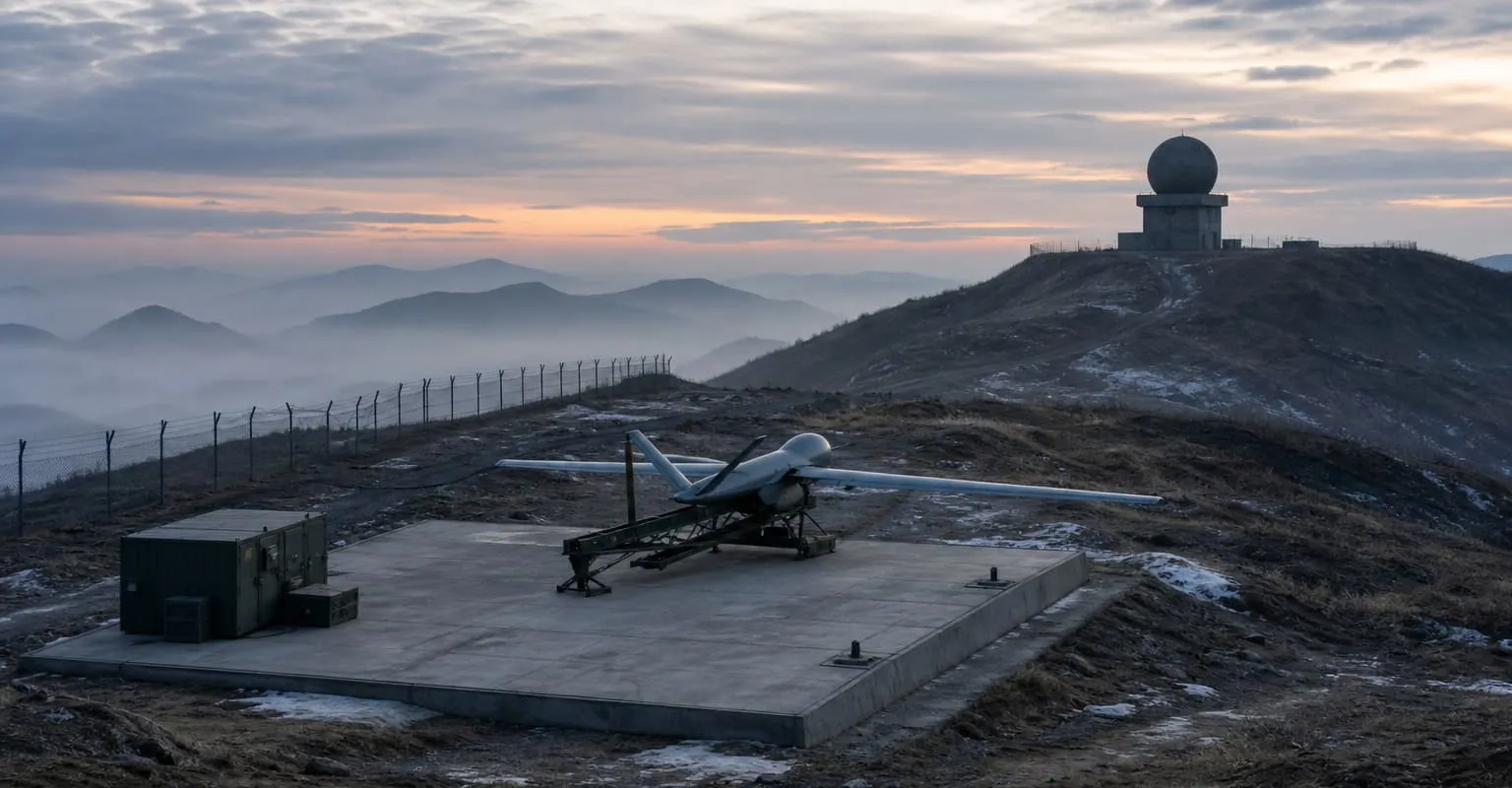
The headline priority is accelerating wartime operational control (OPCON) transfer — shifting from U.S.-led to South Korea–led combined wartime command. Seoul will upgrade ground-air communication radios, build a new wartime military information distribution system for the Combined Forces Command, and field medium-altitude reconnaissance UAVs (MUAV) and long-range surface-to-air guided weapons (L-SAM) early.
Hardware lines include expanded KF-21 fighter mass-production, a nuclear-powered submarine program start, upgraded General Outpost (GOP) border surveillance, unmanned ground sensors, explosive-detection robots, and “physical AI” pilots for transport and base perimeter work. Drone combat adds swarm-drone R&D, suicide drones at multiple ranges, and forward anti-drone and laser air-defense systems against North Korean unmanned aircraft.
Personnel pay for company-grade officers and NCOs rises 5.9%, lifting a sergeant first class (하사, ha-sa) at the first pay step to roughly 3 million won per month. Housing-loan support widens to officers not in official quarters; overseas-stationed officers get 160,000 won per month meal allowances. The Ministry of National Defense pledged active Assembly cooperation so major programs are not delayed.
Why it matters outside Korea
Defense budgets rarely show up in travel guides, but this one reshapes the peninsula security floor airlines, insurers, and DMZ operators price in. A 13.8% capability-spending jump — paired with OPCON infrastructure and border anti-drone layers — signals Seoul is preparing for a Korea-led combined command and a drone-heavy threat picture. For routes through Incheon, Seoul, or Paju, that affects how quickly provocations translate into tour cancellations, base alerts, or “all clear” messaging — even when city life looks normal.
What travelers and expats should watch
- DMZ and JSA itineraries: GOP surveillance upgrades and forward anti-drone spending mean border access can shift on short notice if North Korean unmanned incursions spike. Book refundable products and re-check operator rules the week of travel.
- Exercise seasons near U.S. bases: OPCON communications upgrades and combined-command drills cluster around fiscal-year starts. Near Yongsan, Osan, or Camp Humphreys, expect periodic alert chatter during linked exercises — the budget funds the command layer those drills test.
- Personal drones near the border: Expanded laser air-defense targets incursions from the North. Do not fly hobby drones near the DMZ, border counties, or military installations.
- Assembly hearings through fall: 73.2777 trillion won is a government draft; cuts or delays could shift procurement timelines for Korea-risk watchers.
Context
Read this as Seoul buying the command, sensor, and drone stack for a Korea-led wartime defense — not as “a bigger army means imminent war.” Seoul Shinmun’s Sept. 1 reporting is a budget architecture story: OPCON plumbing, KF-21 production, nuclear-submarine startup, and border anti-drone nets. It explains why peninsula travel risk stays event-driven (missile tests, border incursions, exercise pauses) even when Gangnam restaurants and Jeju beaches feel untouched.
Source
Seoul Shinmun: 내년 국방비 첫 70조 돌파…전작권 전환·첨단전력에 집중 [2027년 예산안] — Korean original; paraphrased for briefing; figures and program names attributed to the Sept. 1 report.