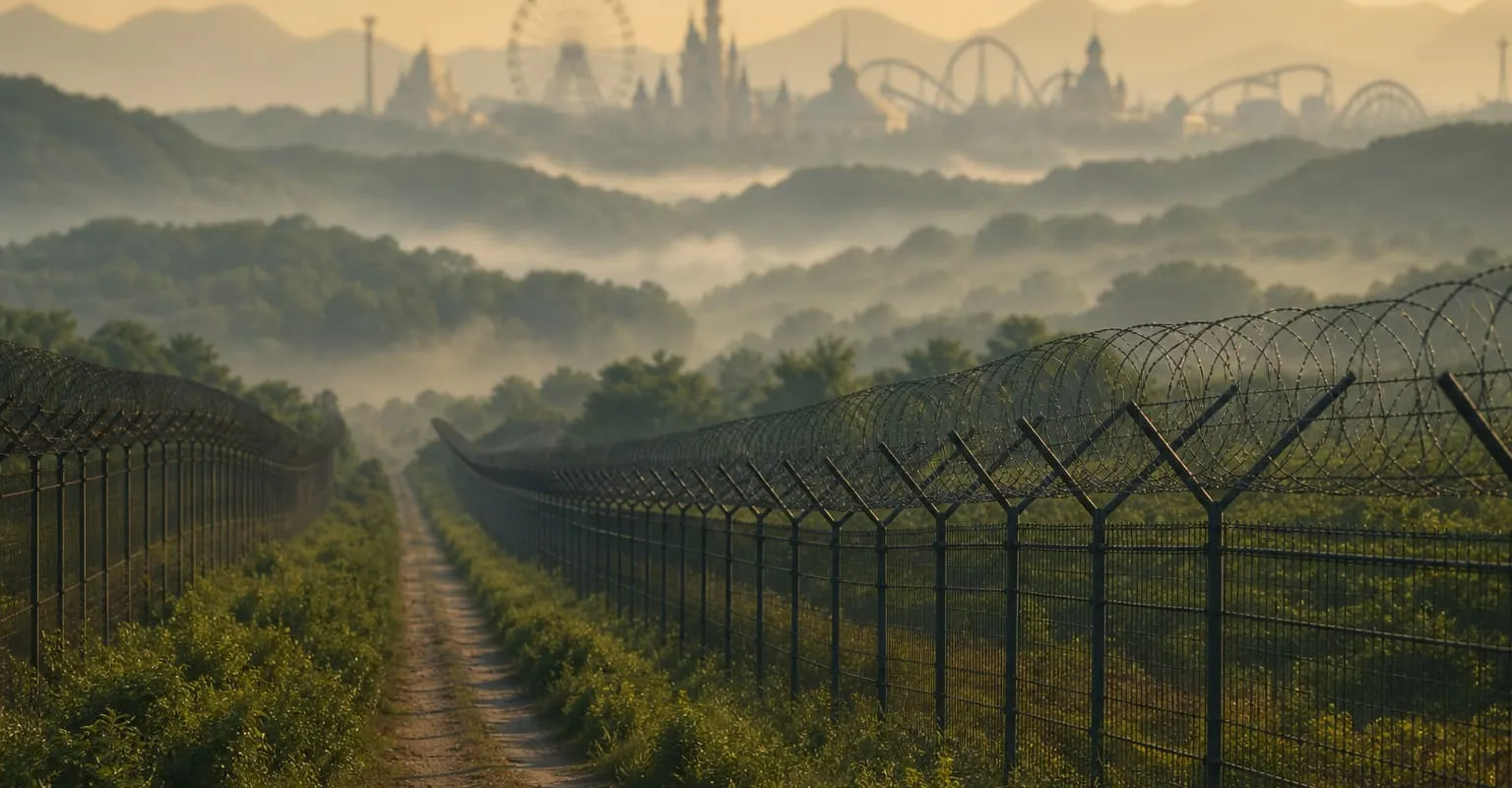
Korea food-travel brief: DMZ 'international peace city' pitch pairs cross-border tourism with theme-park scale
Tongil News interviews Mongolia-based producer Bae Gyeong-hwan on a private-sector plan for DMZ cross-border tourism hubs — what the Disney-era pitch means for border-zone travel watchers.
Source: Tongil News
What happened
According to Tongil News (Aug. 17), Bae Gyeong-hwan — chairman of Mongolia-based OPERAPLAZA ONE and the organizer behind the February 2008 New York Philharmonic concert in Pyongyang — is publicly pitching a “DMZ International Peace City” that would treat the 4 km demilitarized buffer as a multinational tourism and logistics hub. The headline-grabbing line is blunt: he wants to attract a Disneyland-scale theme park inside the zone, with supporting cities, highways, airports, and cruise terminals on both sides of the Military Demarcation Line.
The breakdown
The core idea is cross-border tourism, not the one-way, sealed visits that defined Mount Kumgang or Kaesong Industrial Complex tours. Visitors would enter through a southern gate, pass through the peace city, and exit north toward China or Russia — or reverse the route from the north toward the South. Bae told the desk he first floated the concept through North Korea’s Daepung Group in Hong Kong starting in 2011; work paused after a defense-minister death, then resumed under Kim Jong Un. In 2013 he sent a formal invitation for a Disney chairman to visit Pyongyang and the DMZ; a U.S. legal representative replied with a polite refusal.
Bae distinguishes his plan from earlier Park Geun-hye “DMZ World Peace Park” and Moon Jae-in “DMZ International Peace Zone” proposals by stressing minimal direct government control, multinational private capital, a 24-hour resident population as a de facto safety buffer, and revenue-sharing rather than one-sided aid. He also links Wonsan-Kalma coastal tourism and Mount Kumgang into a broader peninsula tourism belt. Next steps, per the interview: a detailed written proposal from Beijing to the North, then outreach to Washington if momentum builds; he says he wants the message delivered directly to Kim Jong Un. If Pyongyang bites, he envisions a Singapore joint venture between his Mongolian firm and a North-linked private partner.
Why it matters outside Korea
Western readers often treat the DMZ as a fixed museum strip near Paju and Panmunjom. This pitch reframes it as a would-be East Asian tourism choke point — a neutral zone where Chinese, Mongolian, European, and U.S. capital and foot traffic could, in theory, sit between two armies. That matters for anyone tracking Korean Peninsula risk, sanctions carve-outs, or whether private cultural diplomacy (his 2008 concert playbook) still has a lane when official North–South channels are shut. It is not policy; it is a high-visibility private memo aimed at leaders in Pyongyang, Beijing, and Washington.
What travelers and expats should watch
- DMZ tour products stay unchanged: Tongil News reports an aspiration, not an opened gate. Book JSA, Dorasan, or Paju DMZ lines on current military and operator rules — not on interview headlines.
- Cross-border rhetoric vs. visa reality: “Enter south, exit north” would require treaty-level access, not a new KTX stop. Treat logistics talk as a 10+ year horizon, not a 2026 itinerary patch.
- Western Gyeonggi corridor noise: Any revived DMZ mega-project chatter can spike English headlines around Paju, Goyang, and Incheon airport transfers even when street access is static — pad news-reading time if you host clients near the border belt.
- Private-proposal season: Bae told the desk official channels are closed, so expect more opinion-page and interview noise on peace-city branding while Panmunjom operating hours remain the actionable data point.
Context
Read this as a veteran cultural broker recycling a long-running DMZ tourism blueprint for a frozen diplomatic moment, not as “Disney is coming to Panmunjom next month.” Tongil News’s piece is an extended Q&A with a promoter who already proved he can move a 350-person orchestra by chartered Asiana jet — and who openly says the Disney invitation was partly a signal to U.S. agencies, not a finished deal. Korelay’s frame: the interview explains why DMZ tourism keeps appearing in peace-economy debates; it does not change what you can book this week.
Source
Tongil News: “DMZ에 디즈니랜드를 유치하겠다” — paraphrased for briefing; proposal details, timeline, and quotes attributed to the Aug. 17 interview; Korean original.