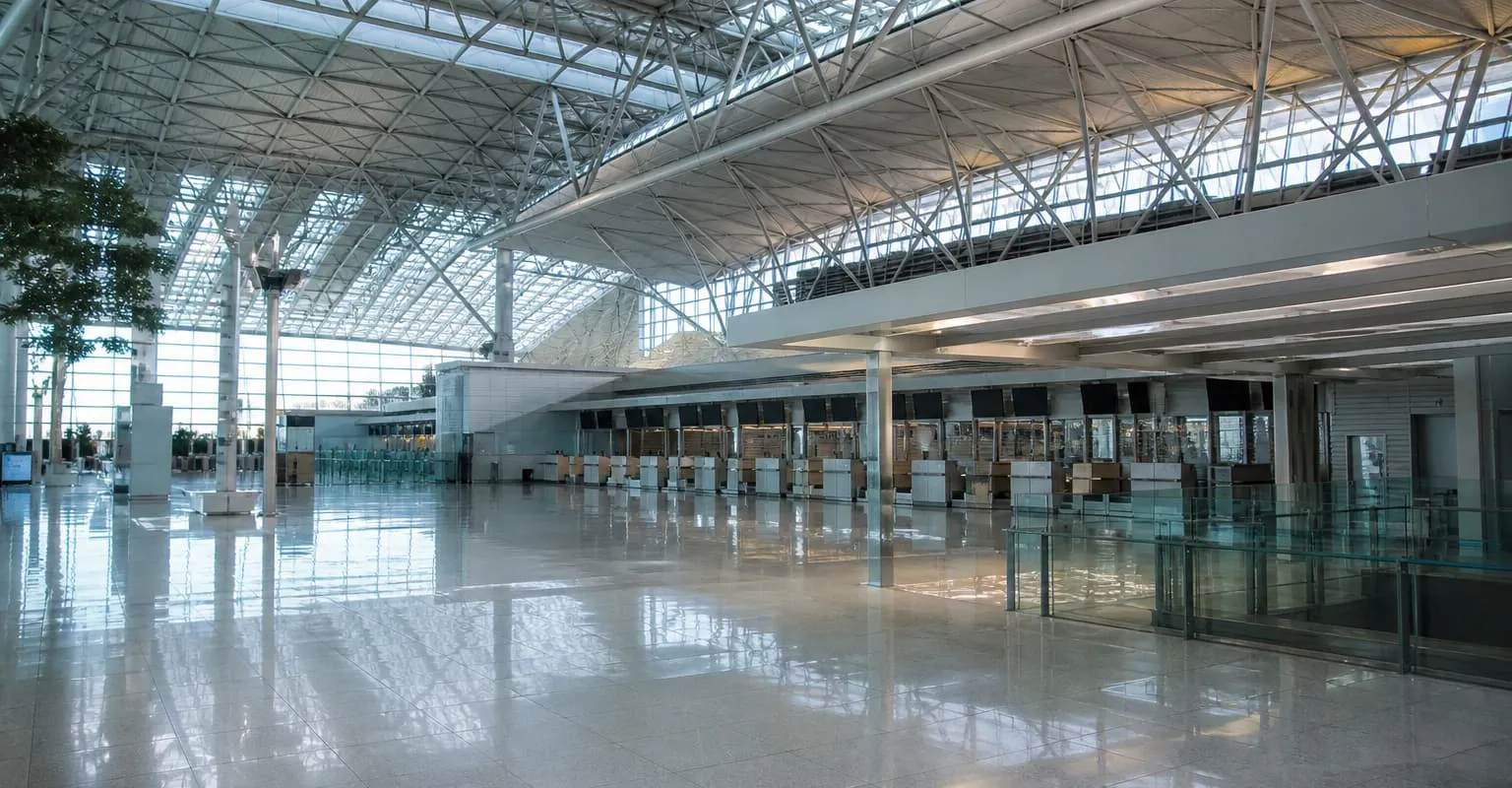
Korea food-travel brief: Incheon tops world for international passengers
ACI preliminary H1 data: Incheon 38.39 million international passengers — what connectors and transfer planners should change.
Source: Euronews
What happened
According to Euronews, South Korea’s Incheon International Airport became the world’s busiest airport for international passenger traffic for the first time, based on preliminary Airports Council International (ACI) data for the first six months of 2026. Incheon handled 38.39 million international passengers in H1, ahead of London Heathrow (37.79 million) and Singapore Changi (34.53 million). ACI is due to confirm figures in its monthly World Airport Traffic Report in September.
The breakdown
Euronews places Incheon about 48 kilometers from Seoul as the country’s main gateway. Incheon International Airport Corporation, quoted via Yonhap in the piece, partly attributes the surge to Middle East travel disruption from the U.S.–Iran war, which redirected traffic away from hubs such as Dubai toward East Asian routings. Transfer passengers at Incheon rose 18.1% year on year to 4.24 million in H1; transfers with final destinations in Europe jumped 63.2% to 210,000.
The airport opened in 2001, serves 101 airlines to 183 cities including 158 international destinations, and completed an expansion in 2024 that lifted annual capacity to 106 million passengers. Ranking history cited: 10th in 2002, 5th in 2018, 3rd in 2024 and 2025 — now first on the international-traffic metric for the first time. Dubai, second in full-year 2024 and 2025 rankings, is forecast to fall outside the top five this year.
Why it matters outside Korea
If you connect through Incheon, book Korea as a Europe–Asia bridge, or brief crews and travelers on hub choice, H1 2026 is a volume and transfer signal — not a tourism brochure. More international bodies and a sharp Europe-transfer spike mean longer security/transfer clocks and busier gates even when your final city is not Seoul.
What travelers and expats should watch
- Do pad connection times at Incheon, especially on Europe-bound transfers — the desk’s Europe-transfer count rose 63.2%.
- Don’t assume Dubai-style Middle East hub habits still dominate every itinerary engine; ACI’s preliminary table puts Incheon first on international passengers for H1.
- Expect September’s confirmed ACI report to lock or revise the ranking — treat 38.39 million as preliminary until then.
- Re-check terminal maps and airline counters after the 2024 capacity expansion; volume at a 106 million-capacity hub still concentrates at peak banks.
Context
Read this as a hub-ranking and transfer-load update, not as “Korea tourism won the summer.” Conflict-driven rerouting is part of the cited explanation; the behavior change for Korelay readers is connection buffer and hub choice, not a victory lap. If your itinerary engine still defaults to a Middle East stopover out of habit, re-price the East Asia bridge with H1 volume and Europe-transfer growth in mind — then add the buffer the ranking implies.
Source
Euronews: South Korea’s Incheon airport becomes busiest in the world for international traffic — paraphrased for briefing; ACI preliminary H1 data, with IIAC comments via Yonhap as attributed in the piece.