Korea food-travel brief: Wonsan missile test and KN-25 rocket deployment reshape what 'in range' means for peninsula travel
Tongil News opinion by defense analyst Lee Sang-soo argues a Wonsan coast launch and forward-deployed 600mm rocket artillery place the capital, Gyeryongdae, and Camp Humphreys inside North Korea's striking envelope — what that means for expats and border-area planners.
Source: Tongil News
What happened
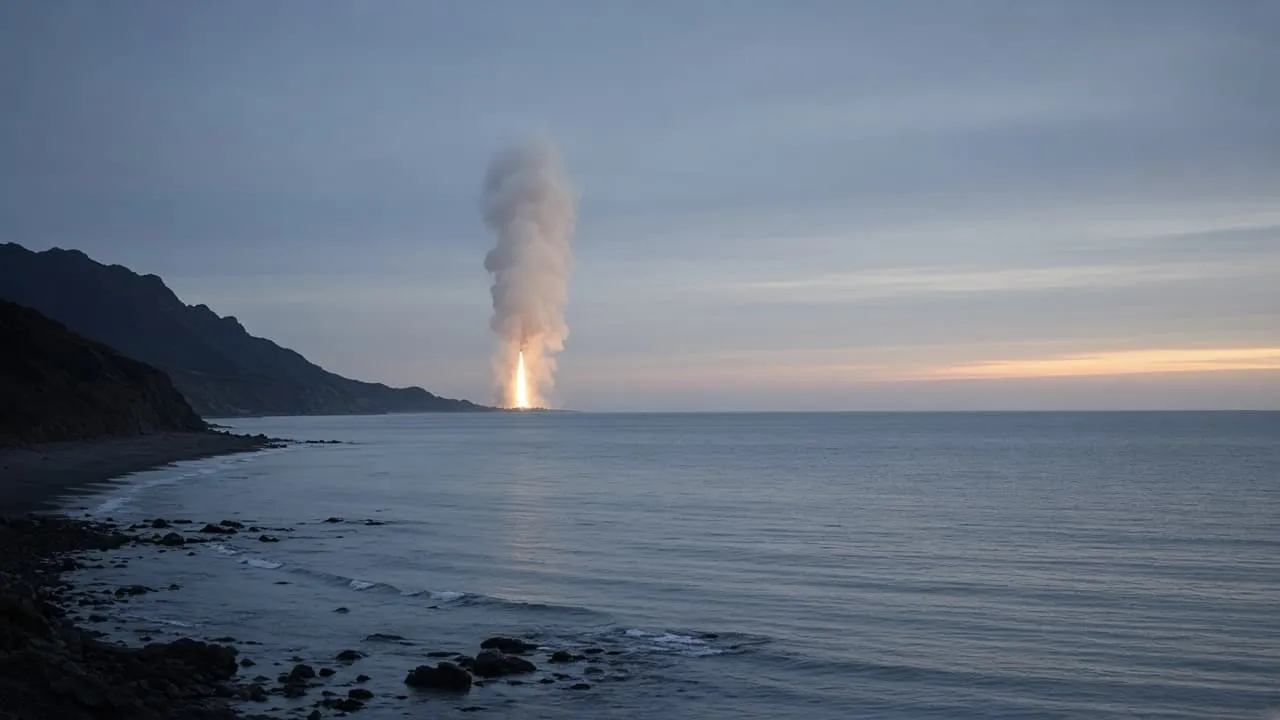
In a Sept. 13 opinion piece for Tongil News, security analyst Lee Sang-soo frames a recent ballistic missile launch from the Wonsan coast — a beach once marketed for tourism development — as more than a one-off protest against the U.S.–South Korea–Japan Freedom Edge exercise. The missile flew roughly 250 km over the East Sea before falling, which Lee describes as a precise tactical warning aimed at the core of South Korea’s defense layout, not routine saber-rattling alone.
The breakdown
Lee argues the signal is geographic. Greater Seoul, Gyeryongdae (Third ROK Army headquarters), and Camp Humphreys in Pyeongtaek now sit inside what he calls North Korea’s direct striking envelope — easy to miss when headlines treat each launch as routine.
Lee also cites a roughly 20-building artillery complex 52 km north of the Military Demarcation Line (MDL), with KN-25 600 mm super-large rocket launchers and 240 mm systems forward-deployed — evidence, in his view, that strike units have moved beyond trials toward field positioning.
The KN-25 is his analytical pivot. Designed for the tactical warhead Hwasan-31, it merges SRBM-style trajectories with rapid salvo fire from one transporter erector launcher (TEL). Bursts seconds apart can reach 380–400 km, covering the capital and rear hubs together. The aim, he writes, is saturation attack — overwhelming U.S.–ROK interceptors (L-SAM, M-SAM Block-II, PAC-3) rather than dodging single missiles.
Lee’s fix pairs Low Altitude Missile Defense (LAMD), KTSSM strikes and electronic warfare on tunnel exits, AI sensor-to-shooter links with human-on-the-loop control, and U.S.–ROK conventional–nuclear integration (CNI) drills — plus crisis channels so deterrence supports coexistence, not accidental escalation.
Why it matters outside Korea
Employers and insurers abroad still default to “Seoul is far from the border.” Lee’s ranges and named bases argue otherwise: Wonsan tests and forward rocket belts put Pyeongtaek and the capital on one map. Multinationals with Humphreys staff need that geometry in travel approvals, not only DMZ cancellation rules.
What travelers and expats should watch
- Camp Humphreys and Pyeongtaek corridor: Lee names Humphreys inside the striking envelope. Visiting family near the base or riding KTX through Pyeongtaek on missile-test weekends means checking USFK and English alert apps — not panic-canceling unrelated Seoul city breaks.
- DMZ and northern Gyeonggi day trips: Forward artillery 52 km north of the MDL is an analyst warning, not a same-day closure order. Pair Imjingak, Paju, or Odusan plans with Emergency Ready when Freedom Edge drills coincide with Wonsan launches.
- Insurance memos abroad: Brief headquarters with sourced ranges (250 km test track, 380–400 km rocket envelope), not social-media evacuation threads.
Context
Read this as a defense scholar’s deterrence-and-travel-risk map after forward KN-25 deployment and a Wonsan launch, not as “North Korea will strike tourist districts tomorrow.” Tongil News publishes Lee’s argument that stronger layered defense and crisis channels can prevent war — it does not change legal entry rules at Incheon, Gimpo, or DMZ tour desks this week.
Source
Tongil News: 평화공존과 억제력의 재구조화 — Korean opinion essay by Lee Sang-soo (Sept. 13, 2026); paraphrased for briefing; ranges, systems, and base names attributed to the piece.