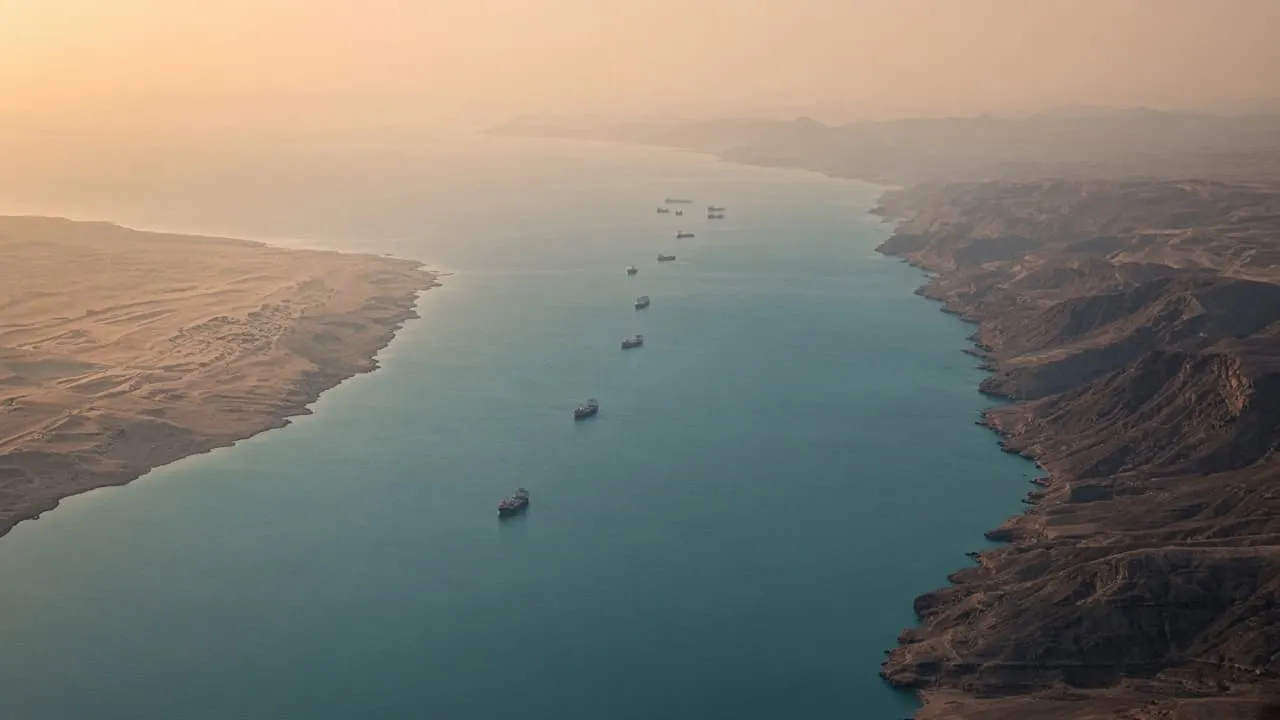
Korea society brief: Ruling-party voices harden against Hormuz troop deployment
A former USFK deputy commander turned DPP lawmaker says Seoul should not send forces now — as panelists debate a U.S. deadline, a UAE survey team, and widening Red Sea fighting.
Source: Ddanzi
What happened
According to a Ddanzi archive of the Sept. 10 broadcast of Kim Eo-jun’s News Factory, an NSC panel debated whether South Korea should join a U.S.-led Hormuz deployment. The sharpest ruling-party signal came from Kim Byung-ju, a Democratic Party lawmaker and former U.S.–ROK Combined Forces Command deputy commander, who said deployment should not happen now. Former Unification Minister Jung Se-hyun and professors Kim Hee-kyo and Lee Hee-soo joined the segment archived on Sept. 11.
The breakdown
Kim Byung-ju argued Seoul must not be dragged into an unjustified war — unlike post-9/11 Iraq or Afghanistan missions tied to a homeland attack on America. He said troop safety could not be guaranteed, Korean tankers might become Iranian targets, and the Lee Jae Myung government is already moving with extreme caution even as it weighs energy security.
Jung Se-hyun cited reporting that Washington set a Nov. 1 deployment deadline and recalled President Lee telling citizens in Paris that any decision would weigh national interest and public consensus. He said Seoul gains little while Washington keeps demanding investment concessions. The government sent a survey team to the UAE; Jung said that should be the limit — alliance face-saving, not combat prep.
Kim Byung-ju called the UAE visit buying time, echoing 2003, when Seoul received no battlefield intelligence until it joined Iraq under a “deployment cooperation team” label — a label that bought six months or more. Post-ceasefire options under review include a U.K.–France-led multinational framework for two to three years of merchant escorts. National Assembly approval remains mandatory.
Panelists warned the conflict is widening: Houthi–Saudi fighting is pushing toward the Red Sea, undercutting early Trump talk of a quick ceasefire. Lee Hee-soo said deployment would make South Korea a priority target and noted Iran’s top security leadership had signaled participating states’ tankers would be first in line. Kim Hee-kyo said audiences he meets almost uniformly reject deployment and put U.S. trade dependence at roughly 18%, far below Canada’s 70%. Kim Byung-ju cited leverage — 10 U.S. warships under maintenance in Korean yards, orders for Korean-built destroyers, six K-9 howitzers purchased as future U.S. main artillery, and semiconductor supply chains Washington cannot easily replace.
Why it matters outside Korea
Alliance managers in Washington are watching whether Seoul’s industrial leverage translates into troops or a firm no. Energy markets already price Hormuz and Red Sea risk; a Korean refusal with public 70–80% opposition cited on the panel would show how far a major U.S. ally will follow discretionary Middle East operations when tanker protection and alliance optics pull in opposite directions.
What travelers and expats should watch
- Treat the UAE survey team as diplomacy, not deployment. Panelists framed the mission as face-saving and intelligence gathering — not orders for combat troops.
- Track Assembly calendar with Blue House language. Kim Byung-ju stressed no troop movement without National Assembly consent; a deployment resolution is the actionable legal moment, not anonymous leaks saying a decision is “inevitable.”
- Monitor fuel and flight routings if Red Sea fighting spreads. Expats on Europe–Asia routes or diesel-heavy provinces should watch airline advisories and domestic energy-price briefings, not only Hormuz headlines.
Context
Read this as an opinion-heavy broadcast panel amplifying ruling-party skepticism while the government officially decides nothing, not as proof Seoul has rejected Hormuz deployment or that troops are mobilizing. The non-wire insight: a four-star former deputy commander is lobbying his party to hold the line so the president can cite public opposition and parliamentary blockage when telling Washington no — while quietly keeping post-war escort options alive under European-led multilateral cover.
Source
Ddanzi: 겸손NSC — 여권 내 호르무즈 파병 반대 확산 (News Factory archive, Sept. 10 broadcast) — Korean broadcast transcript; analysis/opinion panel; paraphrased for briefing; read the original for full detail.