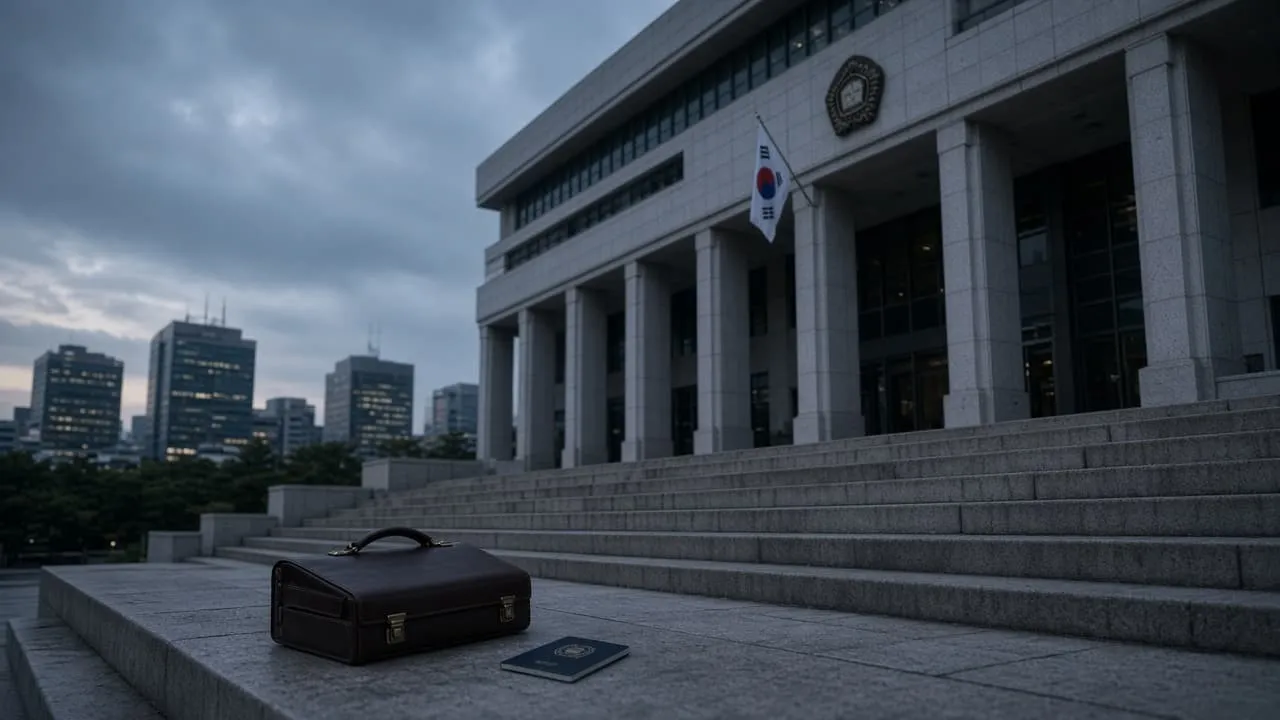
Korea society brief: Acquitted US exchange student stuck in Korea after prosecution appeal
A Jeonbuk National University exchange student acquitted on mental-health grounds cannot return to the US for psychiatric care while prosecutors appeal — a case lawyers say exposes how immigration and detention rules hit foreigners harder.
Source: The Korea Herald RSS
What happened
According to The Korea Herald, a 20-something American exchange student on a D-2-6 visa at Jeonbuk National University remains in South Korea after a not-guilty verdict, because prosecutors appealed the acquittal. His family says psychiatric treatment in the United States is on hold.
On June 22, while in Seoul before a planned return home, the student showed acute mental-illness symptoms late at night. He attempted to enter a dental clinic without success, took delivery items worth 102,400 won, and damaged a building manager’s glasses valued at 130,000 won — 232,400 won total. Prosecutors charged attempted building trespass, theft, and property damage, seeking two months imprisonment. A court issued a detention warrant citing flight risk.
The family was not notified by Korean authorities. Relatives filed a missing-person report when he missed his return date and only then learned he was in custody — by then he had spent about one month detained, half the sentence prosecutors requested. He was later released on bail.
In August, the Seoul Central District Court acquitted him, finding acute mental illness meant he could not bear criminal responsibility. The court did not order a separate psychiatric evaluation; it cited Supreme Court precedent on behavior, evidence, and medical history. He settled with one of two victims and deposited compensation for the other. Prosecutors appealed. His lawyer says he cannot leave for the US while the appeal runs.
The breakdown
Criminal vs immigration: A low-dollar property case ended in acquittal, yet an appellate process still binds him in Korea.
Detention bias: Yoon Yeohyeon of Som law firm told the Herald that Koreans with similar charges are rarely detained, but foreigners are more often held over unstable housing and flight risk. Without local family, a detained foreign defendant may fail to explain health needs early.
Visa clock: Yoon said the student’s visa expired during detention without timely notice. After bail he could not extend his stay and was fined — penalties that can follow even after acquittal.
The father told the Herald his son is stuck because he was found not guilty, not convicted. The father has been in Korea since before bail, pausing work. Needed US treatment is not covered by insurance in Korea, and they say he has nowhere stable to stay.
Yoon adds a strategic paradox: admitting guilt on a minor charge and taking a suspended sentence can mean deportation and faster exit, while fighting innocence through appeal extends the stay.
Why it matters outside Korea
Exchange-student families and university international offices should note that acquittal does not guarantee repatriation. The Herald ties the case to a push to curb routine prosecution appeals — including Supreme Prosecutors’ Office review since June — asking whether reform reaches foreign defendants in minor property cases.
What travelers and expats should watch
- Visa clocks keep running during detention. Ask counsel immediately whether D-2 status will expire before trial — the Herald reports overstay fines even after bail.
- Do not assume family notification. Relatives here learned of custody only after a police missing-person report; keep a home-country contact and embassy channel active during study abroad.
- Appeals can outlast a first-instance win. Budget legal counsel for appellate months, not just the initial hearing.
- Flight-risk logic hits foreigners harder. Domestic defendants sometimes skip custody while foreign passports face stricter pre-trial detention, per lawyer commentary in the piece.
Context
Read this as immigration friction after acquittal, not as proof Korea rejects mental-health defenses. The trap is what happens after acquittal when prosecutors appeal while visa validity and family support abroad were never aligned. The sharp insight: not guilty can be the slower path home than pleading out on a minor charge — a paradox rarely in orientation packets.
Source
The Korea Herald: [단독] “무죄라서 집에 못간다”…검찰 항소에 발 묶인 美교환학생 — Korean original; paraphrased for briefing; read the original for full detail.