Papers brief: KoVRE — efficient Korean visual document search without giant models
arXiv KoVRE trains a 2B single-vector retriever on 708,729 Korean–English query-page pairs, beating larger English-centric VDR baselines on Korean benchmarks.
Source: arXiv
Paper
KoVRE: Training an Efficient Embedding Model for Korean Visual Document Retrieval — Yongbin Choi, Gyuho Shim, Youngjoon Jang (submitted 2 Aug 2026)
ID: arXiv:2608.01389
What it claims
Visual Document Retrieval (VDR) matches text queries directly against document images, preserving layout and visual structure that OCR can strip away. Most VDR models and training data stay English-centric; strong systems often lean on massive backbones or storage-heavy multi-vector representations.
KoVRE (Korean Visual Document Retrieval Embedding) is a single-vector retriever for Korean visual documents, plus a full training recipe. The authors train on 708,729 Korean and English query–page pairs with positive-aware hard-negative mining, and run controlled studies on data mix, hard-negative handling, and reranker-based knowledge distillation. On Korean VDR benchmarks, their 2B model improves sharply over the base backbone and, per the abstract, beats both an 8B single-vector variant and a strong multi-vector baseline — without scaling the backbone or storing many vectors per page.
The breakdown
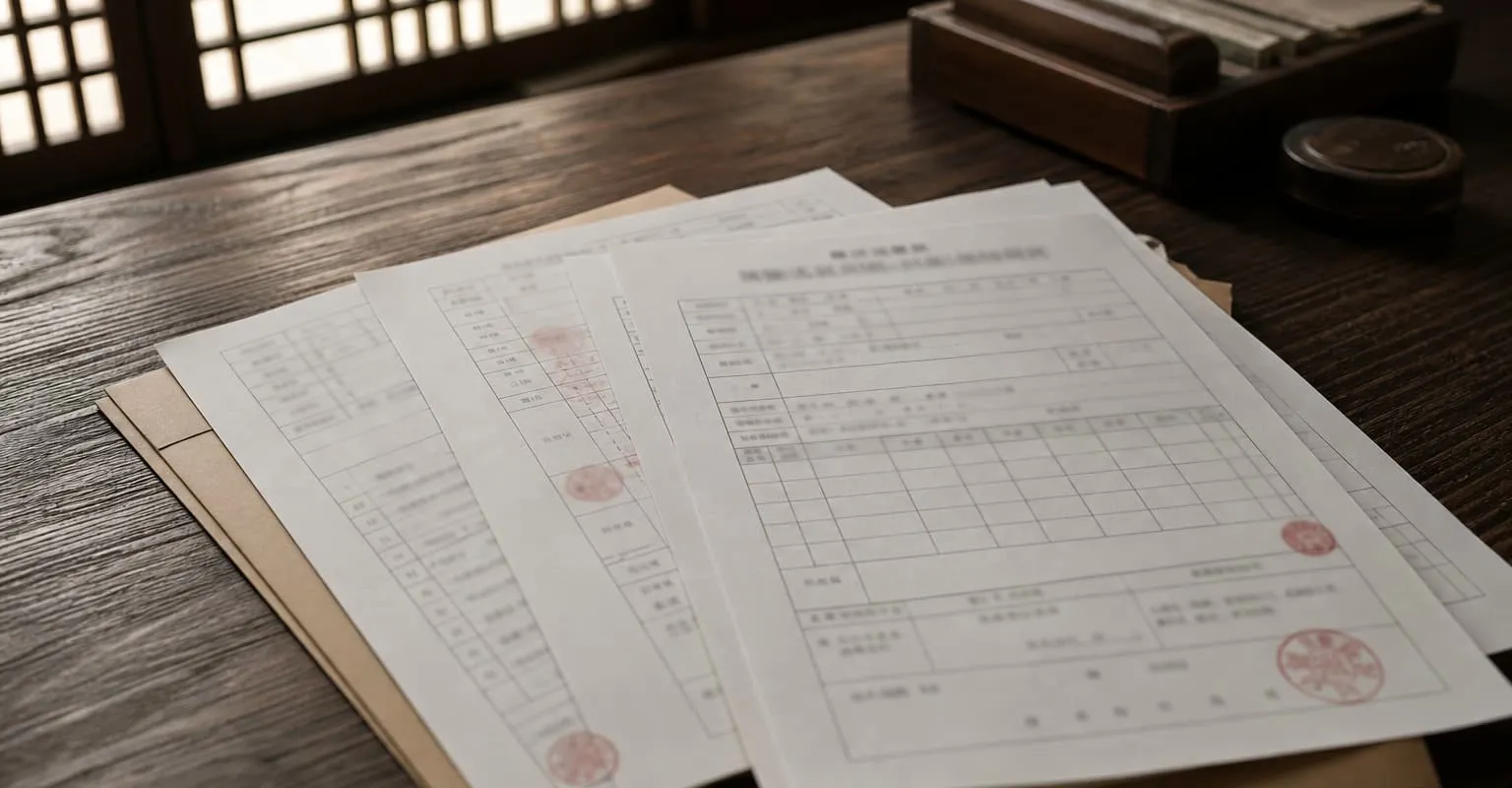
Three design choices matter if you ship search over scans, not just chat over extracted text. First, image-native retrieval keeps tables, stamps, and form boxes in the signal — the use case when Korean admin PDFs, insurance packets, or hospital forms resist clean OCR. Second, bilingual supervision at 708,729 pairs is the authors’ bet that Korean coverage needs curated Korean–English pairs, not an English-only retriever with a language tag. Third, single-vector output is an ops claim: one embedding per page means simpler indexes and cheaper storage than multi-vector VDR, while the abstract says the 2B model still clears an 8B single-vector sibling and a multi-vector baseline on their Korean evals. Hard-negative mining and distillation from a reranker are the training levers they ablate — worth reading in the PDF if you fine-tune your own corpus.
Why readers outside the lab should care
Expats and firms buried in Korean paperwork — tenancy contracts, tax notices, clinic intake forms, visa annexes — often discover that “just OCR it” loses column alignment, official seals, and handwritten marginalia. A Korea-tuned VDR stack is the difference between search that understands how the page looks and search that only sees a noisy text dump. For overseas teams building RAG over Korean scans, KoVRE is a signal that efficient single-vector models can be competitive without renting an 8B embedding farm or a multi-vector index per tenant.
What travelers and expats should watch
- Do ask vendors whether document search runs on page images or on OCR text alone — layout-heavy Korean forms punish text-only pipelines.
- Do compare storage and latency for single-vector vs multi-vector retrieval before you index thousands of scanned pages.
- Don’t assume English VDR checkpoints transfer to Korean admin PDFs; the abstract frames existing resources as English-heavy.
- Expect benchmark gains to be author-reported until you eval on your document types (receipts, contracts, clinical forms).
- Do keep human verification on high-stakes matches — retrieval suggests candidates; it does not certify legal meaning.
Context
Read this as a Korean document-search engineering report, not as a shipped product announcement. Korelay frame: Korea’s form-and-stamp bureaucracy is a visual-document problem for overseas residents long before it is a chatbot problem. If KoVRE-class models land in enterprise search, the overseas-useful habit is unchanged — spot-check retrieved pages against originals before you act on a match.
Source
arXiv:2608.01389 — abstract and framing cited; open the OA PDF for benchmarks, ablations, and training details. Do not republish the PDF.