Papers brief: Umulsai digitizes Jeongganbo without a Western staff hack
arXiv report on Umulsai — a browser-native plain-text format and engraver for Jeongganbo, Korea's grid mensural notation still used in traditional music.
Source: arXiv
Paper
Umulsai: A Plain-Text Format and In-Browser Engraving System for Jeongganbo, Korean Mensural Notation — Danbinaerin Han (submitted 27 Jul 2026)
ID: arXiv:2607.24230
What it claims
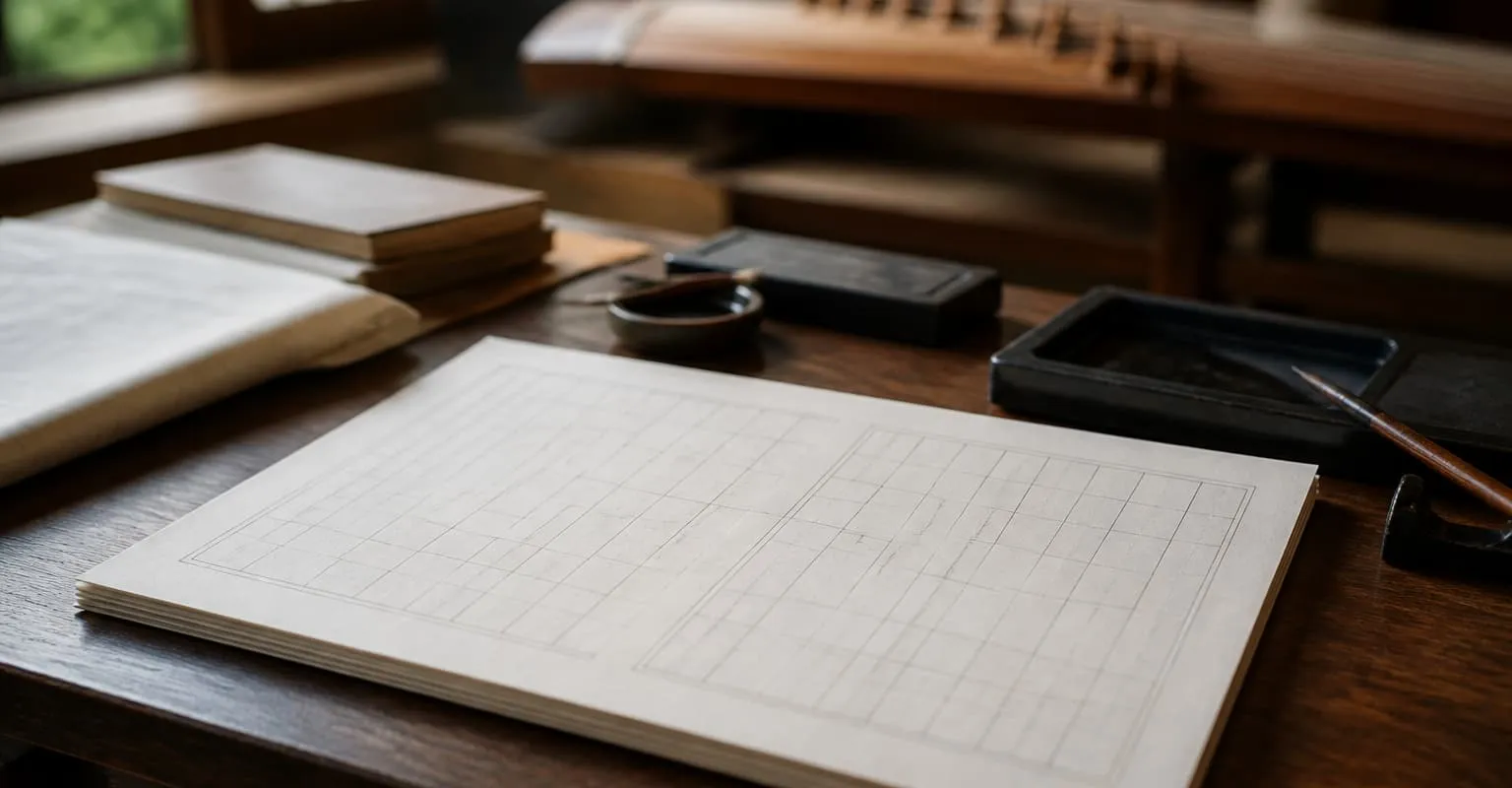
Jeongganbo (jeongganbo) is fifteenth-century Korean grid mensural notation still standard for traditional music: vertical columns of square beat-cells read right to left; syllable position and share inside a cell encode duration. That geometry fights Western staff engravers, and the author reports no practical digital tool has stayed in sustained distribution.
Umulsai is a static, serverless browser editor built around three pieces: (1) a human-writable plain-text format whose spatial layout maps one-to-one to the notational grid, so duration in text mirrors duration on the page; (2) an engraving engine that automates published-score conventions — right-to-left column flow, daegang section lines, octave-variant Sinographs, ornament attachment, micro-spacing; (3) a dependency-free implementation where documents remain plain data, enabling print-quality output, playback, and interchange with newer machine encodings. The implementation used an AI-assisted, expert-led workflow verified against published reference scores — disclosed in the report.
The breakdown
Western staff tools fail Jeongganbo for a structural reason, not a font problem: duration is encoded by cell geometry and share, in columns that flow right to left. Umulsai’s plain-text format keeps that spatial contract so a human can type what the page means. The engraver then applies published-score conventions automatically — daegang section lines, octave-variant Sinographs, ornament attachment — instead of asking a Western layout engine to invent a mapping.
Because the app is static and serverless, documents stay plain data: portable for print, playback, and future machine encodings. The report also flags typographic edge cases and planned interoperability with MusicXML/MEI and optical music recognition pipelines — neither is finished work. The AI-assisted authoring disclosure matters for trust: the domain expert still verifies against published references.
Why readers outside the lab should care
If you archive, teach, or tour Korean traditional music, “export to MusicXML and hope” has been a dead end for Jeongganbo’s grid semantics. A plain-text plus browser engraver is an ops unlock for overseas ensembles, museums, and ethnomusicology labs that cannot keep a Korean desktop stack alive. It also shows why heritage formats need native digital models, not Western-staff approximations.
Digital humanities teams that already preserve Korean texts should treat notation tooling as first-class heritage infrastructure, not a niche plugin.
What travelers and expats should watch
- Do look for Jeongganbo-native tools (or Umulsai-class workflows) before forcing gugak scores into Western engraving software.
- Do treat AI-assisted score tooling as needing expert verification — the paper itself discloses that regime.
- Don’t assume MusicXML/MEI interchange is finished; the report lists it as planned work.
- Expect typographic edge cases; published references remain the ground truth.
- Do prefer plain-data interchange you can archive offline — serverless browser tools still need export discipline.
Context
Read this as infrastructure for Korean musical literacy in digital form, not as a consumer music app review. Korelay frame: Jeongganbo is not “exotic staff” — it is a different encoding problem, and Umulsai attacks it on its own geometry. Overseas readers planning gugak collaboration should budget time for native notation tooling the same way they budget for instruments and teachers.
Source
arXiv:2607.24230 — abstract and framing cited; open the OA PDF for format semantics and engraving rules. Do not republish the PDF.